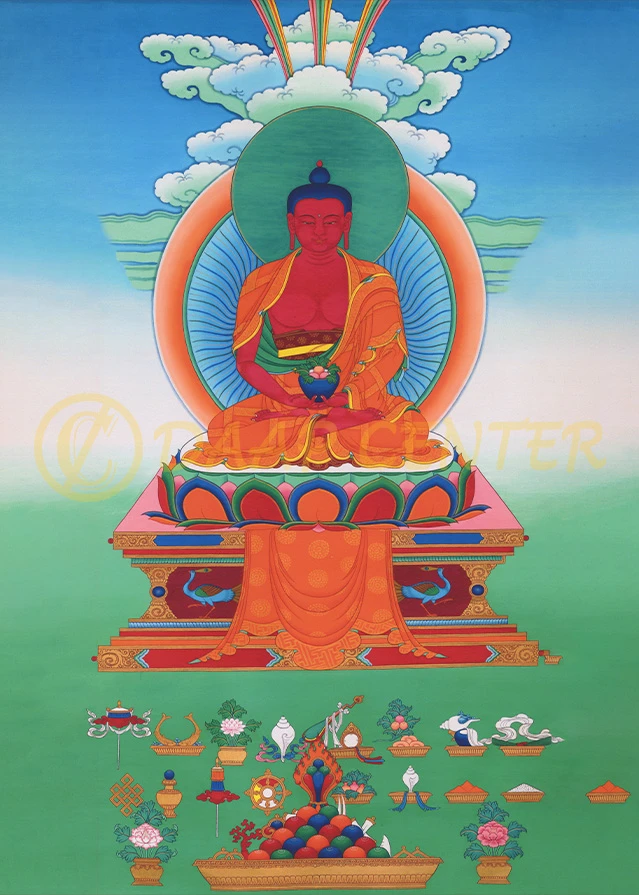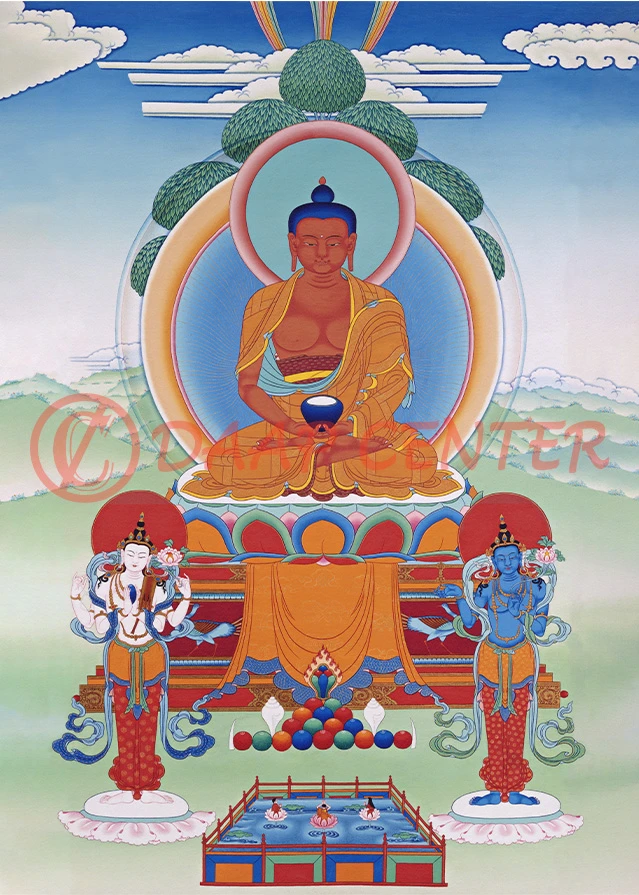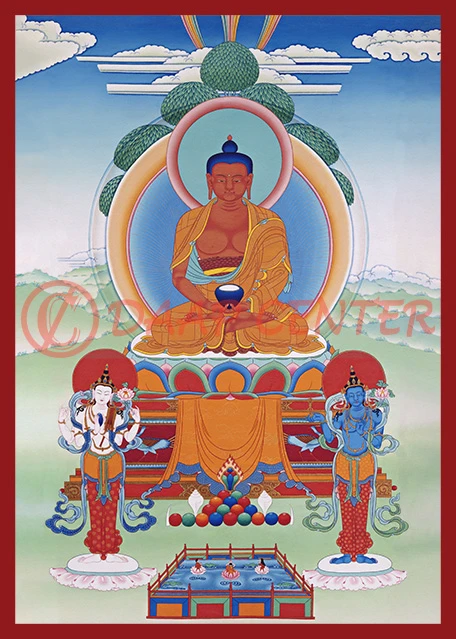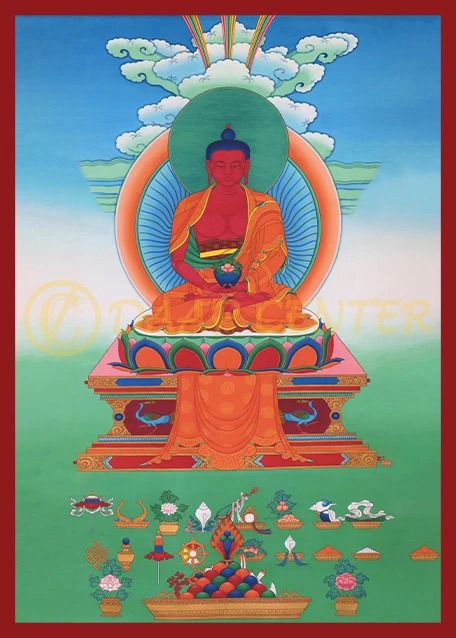
Amitābha Buddha, known in the Tibetan tradition as Öpakmé, is the luminous embodiment of Infinite Light and the wisdom of discernment. As the sovereign of the Western Pure Land, Sukhāvatī, he represents the transforming power of ruby-red wisdom light, which purifies attachment and reveals the clarity of awakened insight.
He is seated upon a pristine lotus throne in vajra posture, expressing unshakable meditative stability and complete absorption in samādhi. His hands rest in the meditation gesture (dhyāna mudrā), gently holding an alms bowl—a symbol of purity, equanimity, and boundless generosity—signifying his readiness to sustain and guide all beings on the path to liberation.
Amitābha wears the simple monastic robes of a Buddha, reflecting renunciation, ethical discipline, and inner purity. His deep red body color embodies discriminating wisdom, the compassionate awareness that perceives each being distinctly while remaining free from grasping. This red hue also conveys loving magnetism, drawing beings toward awakening through compassion rather than force.
His serene, balanced expression radiates peace and unconditional acceptance. With eyes softly lowered, he embodies the perfect harmony of inward meditative stillness and outward compassionate presence. Through this form, Amitābha Buddha offers assurance that liberation arises through calm awareness, devotion, and the gentle illumination of wisdom.
An Amitābha Buddha thangka is kept as a support for peace, clarity, and compassionate awareness. His presence helps calm the mind, reduce attachment, and cultivate wisdom and kindness in daily life. Traditionally associated with the Pure Land path, the thangka serves as a visual focus for meditation, aspiration, and remembrance of liberation, bringing a gentle, harmonious, and uplifting energy to any space.