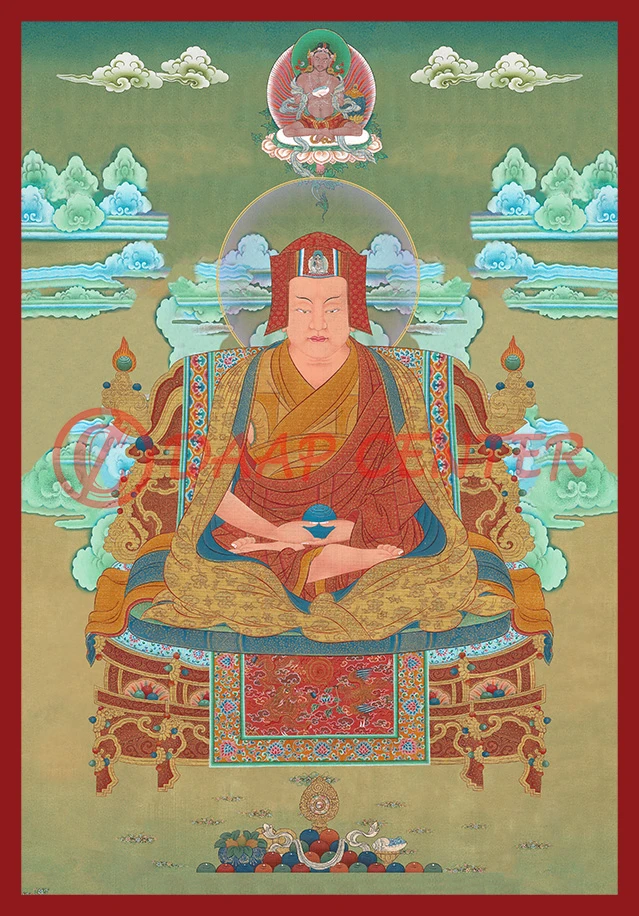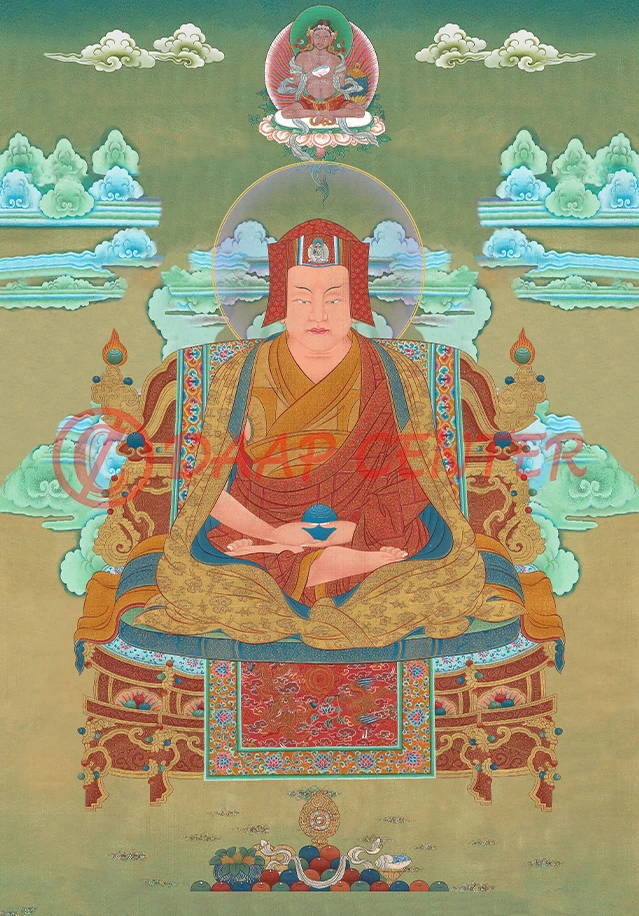
Jetsün Gampopa (1079–1153), also known as Dakpo Lhajé, is one of the central masters of the Kagyu lineage and the principal disciple of Jetsün Milarepa. In this thangka, Gampopa is depicted seated in a calm meditative posture, embodying the union of monastic discipline and yogic realization that defines his unique role in Tibetan Buddhism.
Clad in monastic robes, he represents renunciation, ethical conduct, and systematic training on the path. His composed expression reflects deep meditative stability and compassionate wisdom. As the master who integrated the Kadampa teachings with the Mahamudra tradition of Milarepa, Gampopa symbolizes the harmonious blending of study, contemplation, and direct realization.
Often regarded as the one who established the Kagyu tradition on a firm monastic foundation, his presence in a thangka emphasizes continuity of lineage and clarity of instruction. A Gampopa thangka serves as a powerful support for meditation, guru yoga, and lineage devotion, reminding practitioners that awakening arises through disciplined practice grounded in authentic transmission.