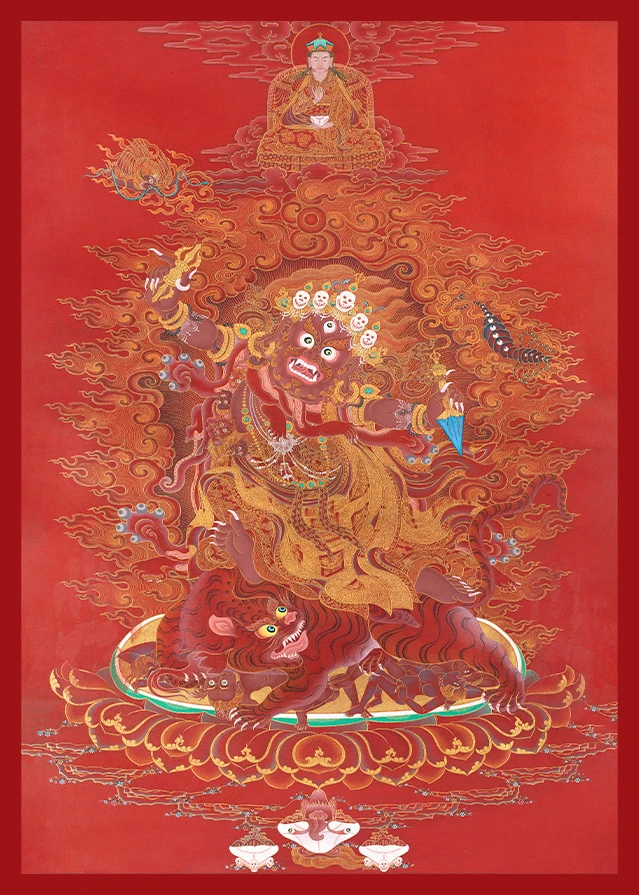
Guru Dorje Drolo (Wild Wrathful Vajra), one of the eight manifestation of Guru Padmasambhava. He is often depicted in a wrathful posture, riding a tigress atop a lotus throne. The tigress represents the powerful and fearless nature of Guru Dorje Drolo. Riding the tigress signifies his mastery over primal instincts and his ability to harness and transform raw energy for spiritual awakening.
Beneath the tigress is a lotus throne, which symbolizes purity and spiritual enlightenment. The lotus rises above the muddy waters of worldly existence, signifying Guru Dorje Drolo's transcendence over samsara and his unwavering compassion. He has three big eyes and sharp teeth with red body color, symbolizes fierce compassion, the transformation of passion into wisdom, dynamic energy for performing enlightened activities, and the purifying, protective nature of wisdom against negative influences.
And depicted demons beneath the tigress, symbolizes the journey of spiritual transformation, protection from negative forces, and the attainment of wisdom and liberation under his guidance.
He is portrayed with fire flames streaming behind his back, represent his inner power, energy and the transformative force of wisdom and also symbolize the burning away of obstacle, negativities, and delusions on the path to enlightenment.
Three big eyes, symbolize his ability to see the past, present, and future simultaneously, representing omniscience and heightened awareness. They also signify his vigilance and readiness to protect beings from ignorance and harm.
Sharp teeth, represent his fierce compassion and the power to destroy ignorance, negative emotions, and obstacles on the path to enlightenment. The sharp teeth highlight his wrathful aspect, emphasizing his role in cutting through delusions and protecting practitioners.
He typically holds a vajra (dorje) in his right hand and a phurba (ritual dagger) in his left. The vajra symbolizes indestructible wisdom and skillful means, while the phurba is used to pin down obstacles and negativity.
He is adorned with white inner garment, richly patterned with blue, pink shades inside and monk’s robe (choego) draped from his waist over his left shoulder. These layers of clothing illustrate Guru Dorje Drolo's embodiment of purity, deep tantric knowledge, and commitment to the Buddhist path.
These manifestations are often depicted in thangkas, each with their own unique iconography and attributes. They serve as a means for practitioners to connect with Guru Padmasambhava’s enlightened qualities and to receive his blessings and teachings. The consorts and manifestations are integral to understanding the depth and breadth of Guru Padmasambhava’s impact on Vajrayana Buddhism and his role as a spiritual guide for countless practitioners.
- Spiritual Inspiration: Thangkas serve as visual aids for meditation and contemplation, inspiring spiritual devotion and reminding practitioners of the qualities and teachings of the depicted deity or master.
- Blessings and Protection: It is believed that thangkas carry the blessings and protective energies of the depicted deity or master. By hanging a thangka, practitioners invite these blessings into their homes or places of practice, creating a sacred atmosphere.
- Enhanced Meditation Practice: Meditating in the presence of a thangka can deepen concentration and spiritual insights, as practitioners connect with the qualities and enlightened presence of the figure depicted.
- Cultural and Artistic Appreciation: Thangkas are also appreciated for their artistic beauty and cultural significance, serving as a link to Tibetan Buddhist traditions and history.
As for where to hang a thangka like Guru Dorje Drolo:
- Altar or Shrine: The most common place to hang a thangka is on an altar or shrine dedicated to spiritual practice. This space is often considered sacred and conducive to meditation and prayers.
- Meditation Room: If you have a dedicated meditation room or space, hanging the thangka there can create a serene environment conducive to spiritual practice.
- Living Room or Study: Hanging a thangka in a living room or study area where you spend time contemplating or reading spiritual texts can also be beneficial, as it serves as a reminder of spiritual goals and teachings.
- Above Bed: In some traditions, hanging a thangka above the bed is believed to provide protection and auspicious dreams during sleep.
Ultimately, the placement of the thangka should be in a location where you feel comfortable and where it can serve as a focal point for spiritual practice and inspiration in your daily life.