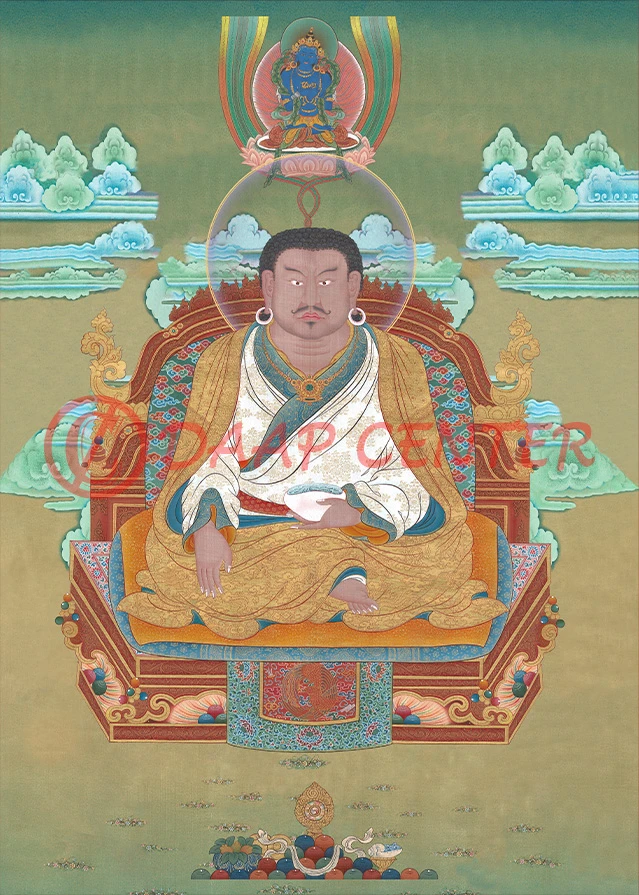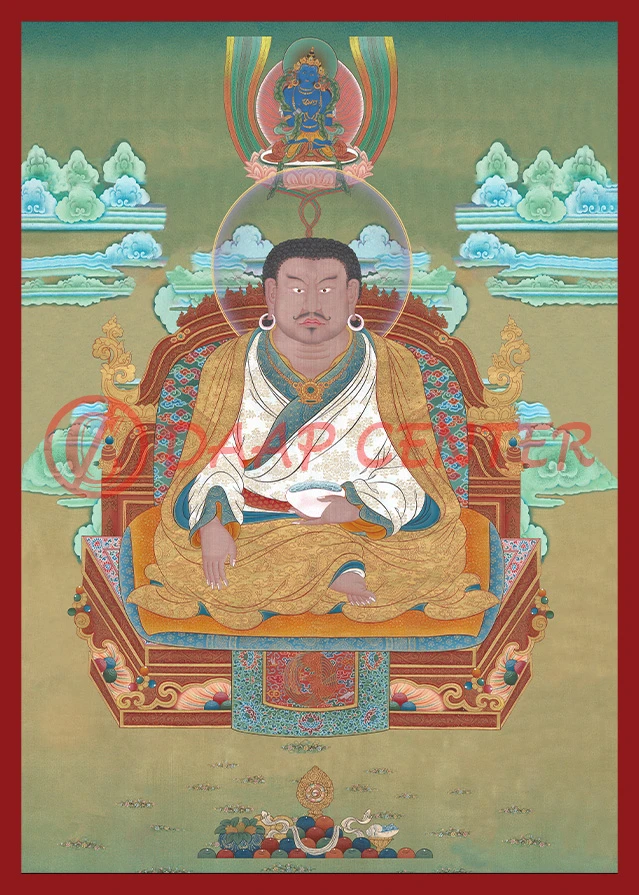
Marpa Lotsāwa (1012–1097), also known as Marpa Chökyi Lodrö and widely revered as Marpa the Translator, was one of the most influential figures in Tibetan Buddhism and the founder of the Kagyu lineage, often referred to as the Marpa Kagyu in his honor. He played a crucial role during the “second spread of Buddhism” in Tibet by transmitting profound Indian Vajrayana teachings.
Through multiple arduous journeys to India, Marpa studied under great masters such as Nāropa, Maitrīpa, and the dakini Niguma, receiving complete transmissions of Mahamudra, the Six Yogas of Nāropa, and other tantric practices. He devoted his life to translating and preserving these teachings in Tibetan, ensuring their continuity at a time when Buddhism was declining in India.
Marpa is often depicted as a householder rather than a monk, symbolizing the integration of deep spiritual realization with everyday life. He is especially remembered as the teacher of Milarepa, whose enlightenment stands as a testament to Marpa’s uncompromising yet compassionate training methods.
A Marpa Lotsāwa thangka symbolizes devotion to an authentic lineage and the power of direct transmission within Vajrayana Buddhism. It reflects Marpa’s unwavering commitment to disciplined practice and his role in preserving and transmitting profound teachings.
His life stands as a reminder that spiritual realization arises through sustained effort, trust in the guru, and dedication to the path. For practitioners, his image supports guru yoga, lineage devotion, and meditation practice. For others, it represents the integration of spiritual wisdom into everyday life.
More than decorative art, a Marpa Lotsāwa thangka serves as a source of inspiration, encouraging diligence, courage, and faith in the transformative power of sincere practice.