Jetsün Milarepa (1052–1135) is one of Tibet’s most beloved yogis, poets, and saints, celebrated in Tibetan Buddhism for his extraordinary life of hardship, dedication, and realization. He was the most famous disciple of Marpa Lotsāwa. Renowned for his perseverance and profound spiritual transformation, Milarepa attained realization through intense meditation and unwavering devotion to his guru. He is especially celebrated for his spontaneous songs of realization (dohas), which express deep insight into the nature of mind.
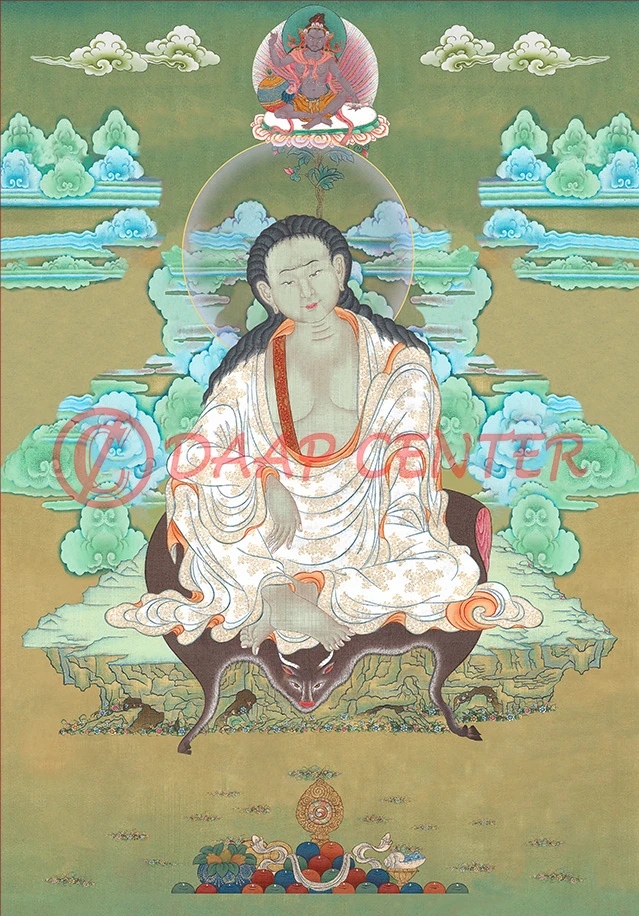
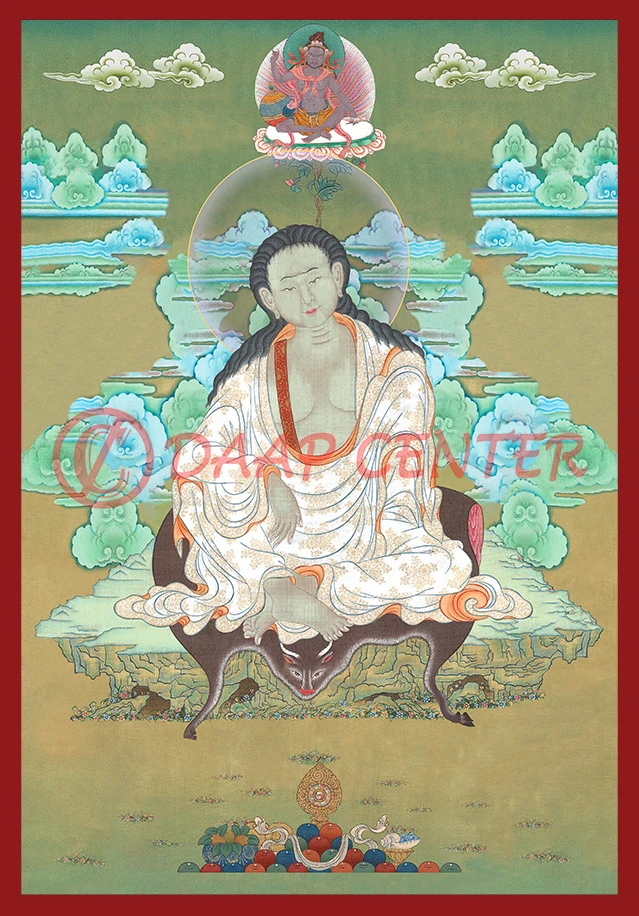
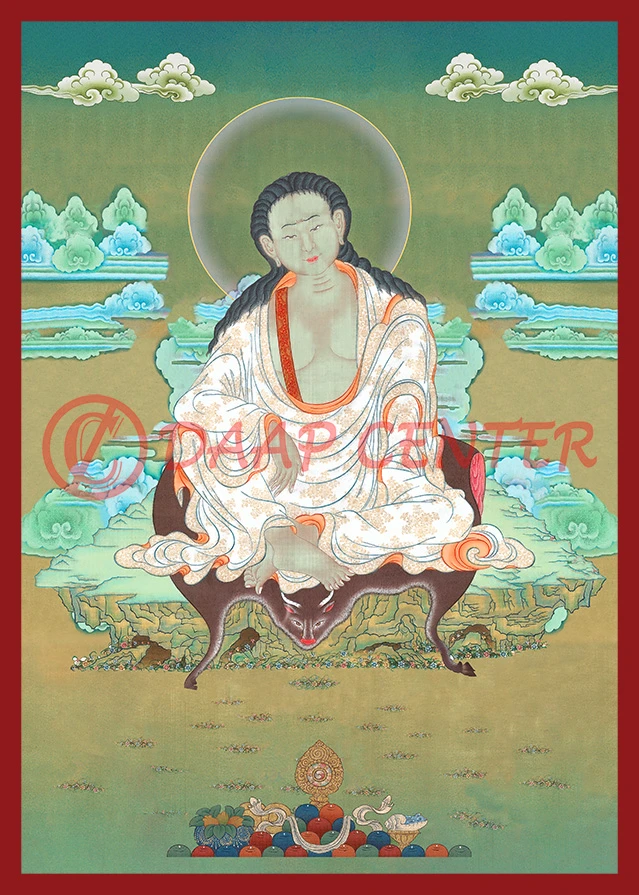
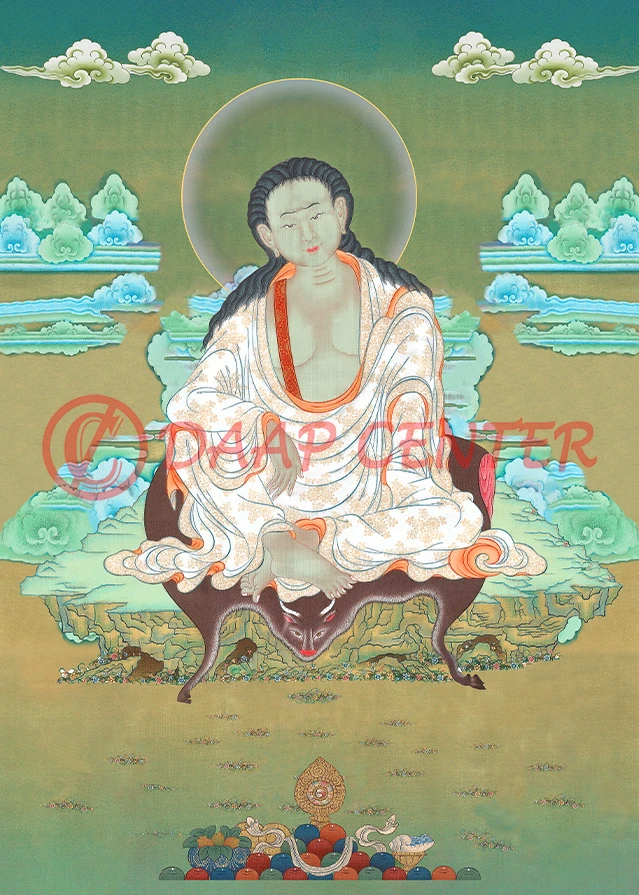
In this thangka, Milarepa is depicted seated in a meditative posture, with his right hand cupping his ear. This distinctive gesture symbolizes deep listening, inner sound meditation, and the spontaneous expression of realization through spiritual song. In his left hand, he holds a skull cup (kapala), representing impermanence, transformation, and the wisdom born from rigorous spiritual discipline.
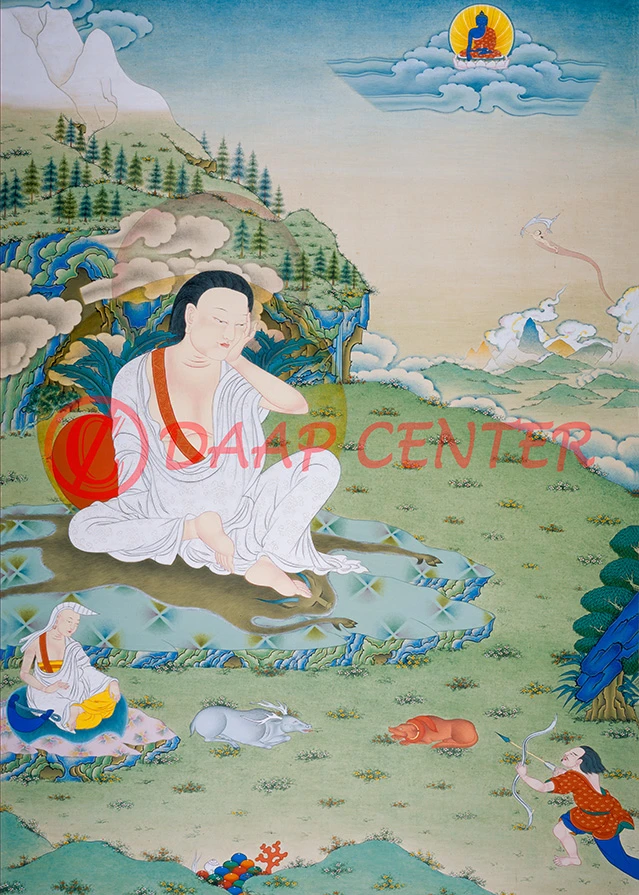
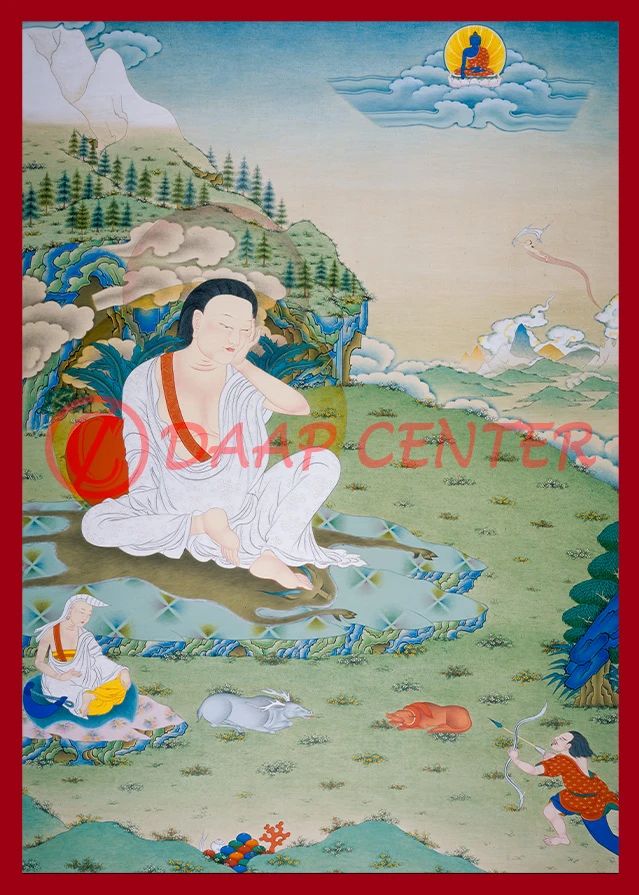
He sits upon a deer skin, signifying mastery over the untamed nature of the mind and his connection to ancient yogic traditions. His lean body and greenish complexion reflect years of solitary meditation sustained by a life of extreme simplicity, almost entirely on nettle soup, serving as a visual reminder of his asceticism and unwavering determination.
He is clothed in a simple white cotton robe, emphasizing renunciation, purity, humility, and freedom from worldly attachment.
The surrounding mountainous landscape evokes the remote Himalayan caves where Milarepa practiced in isolation, emphasizing silence, endurance, and direct realization. A soft halo surrounding his head signifies spiritual accomplishment, while the open sky and drifting clouds enhance the sense of vastness and inner freedom.