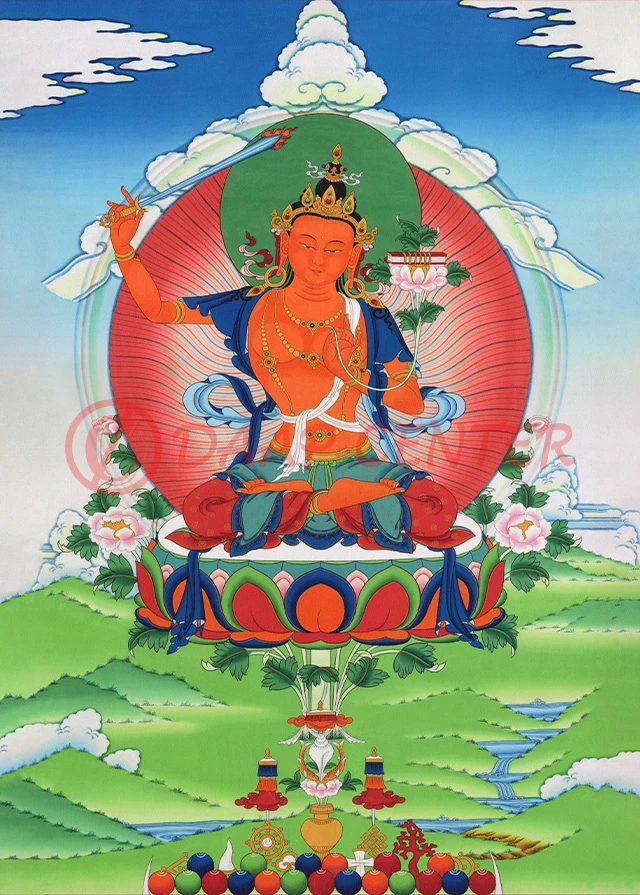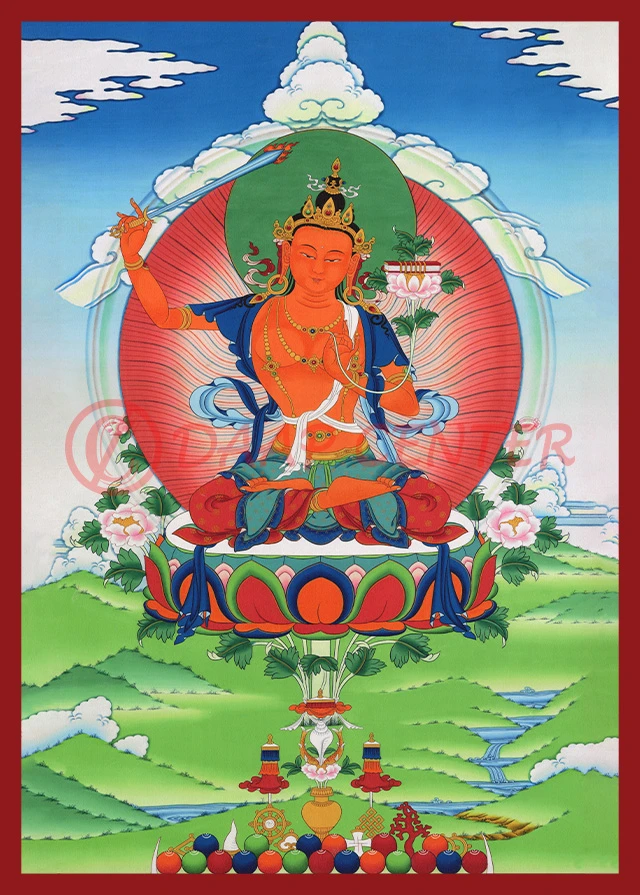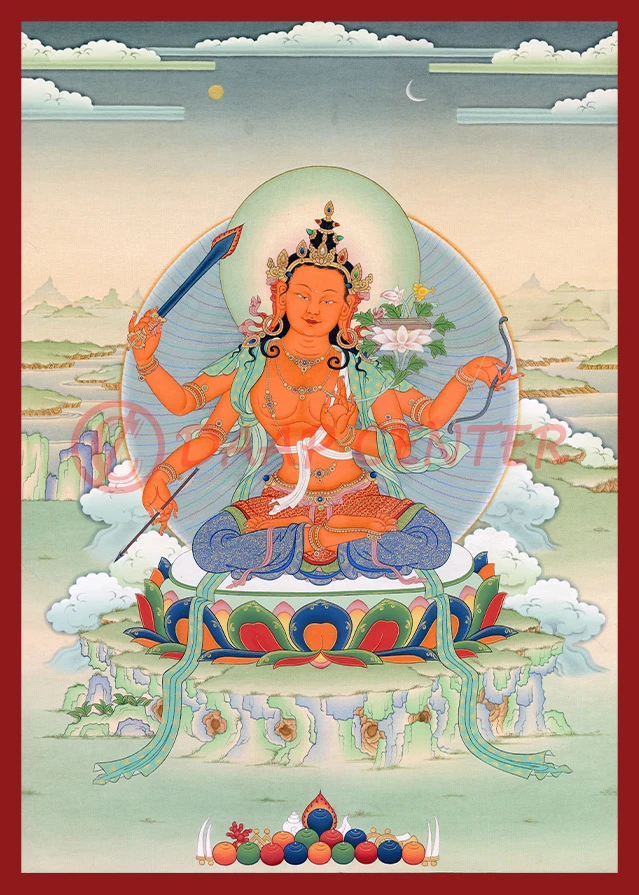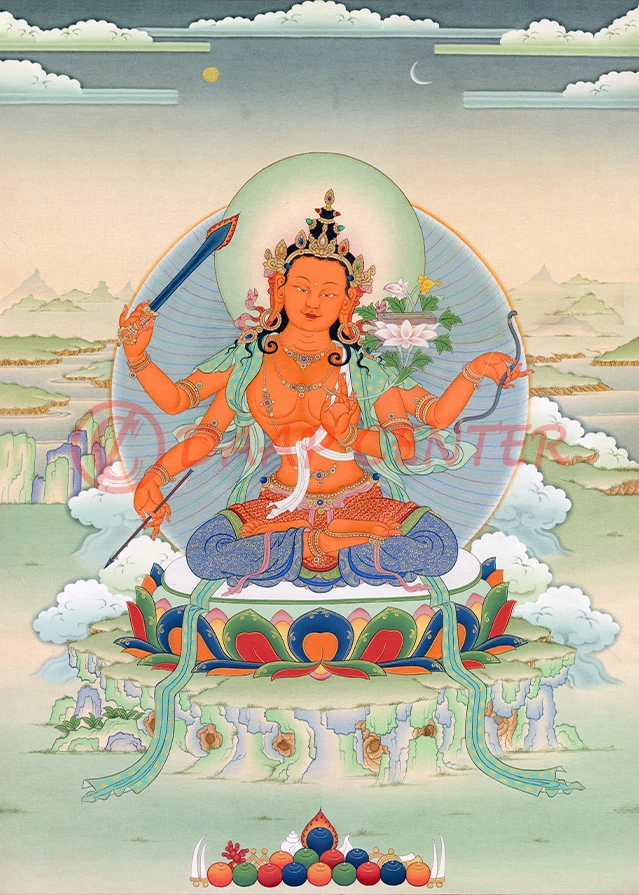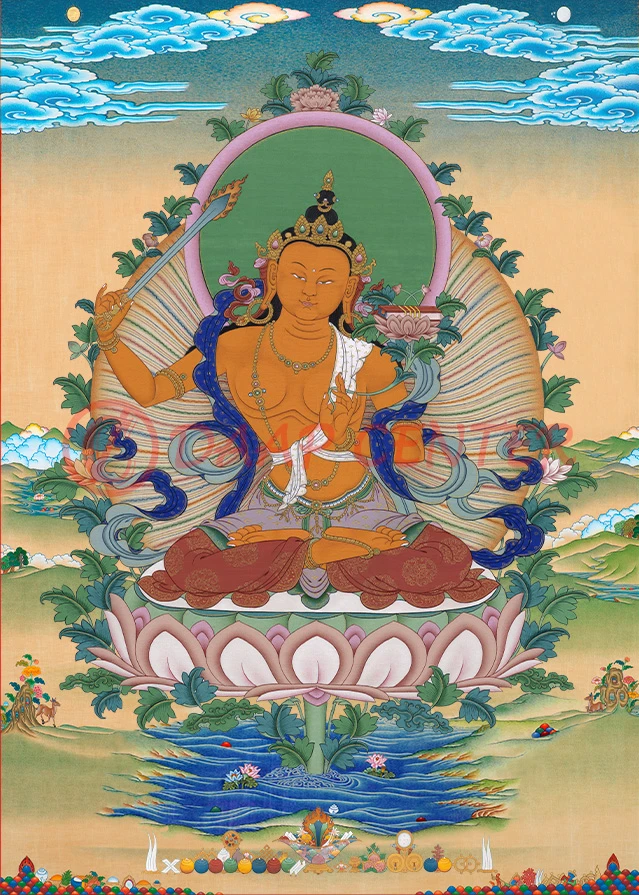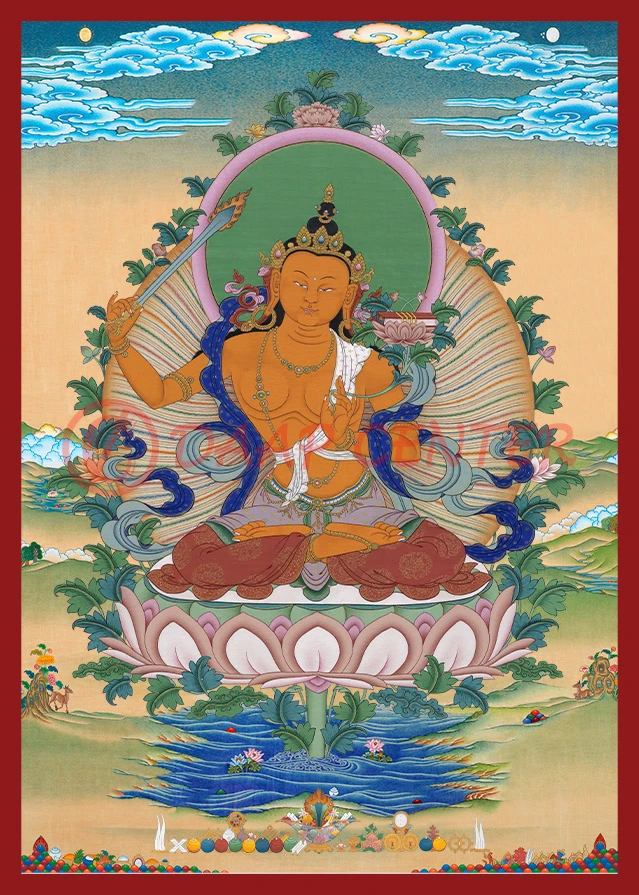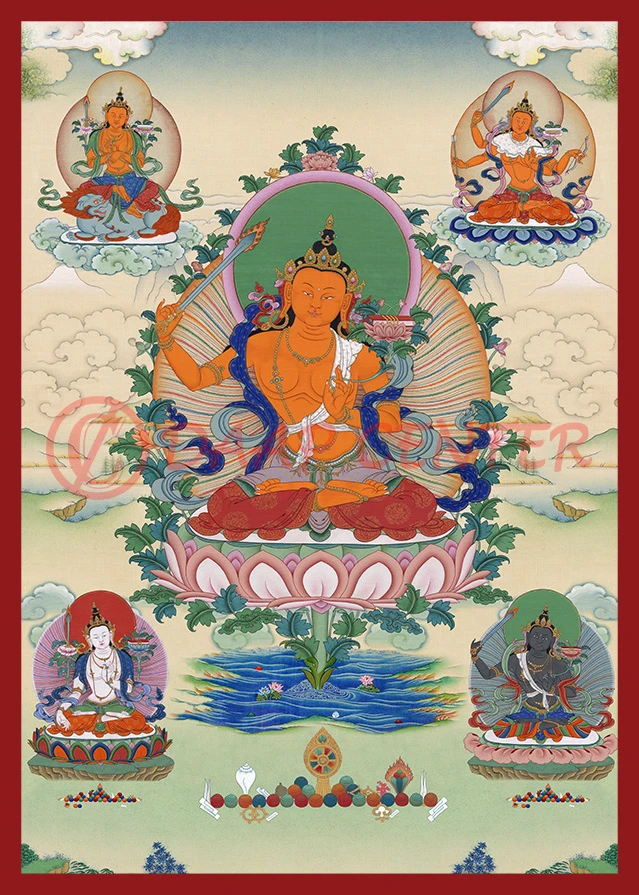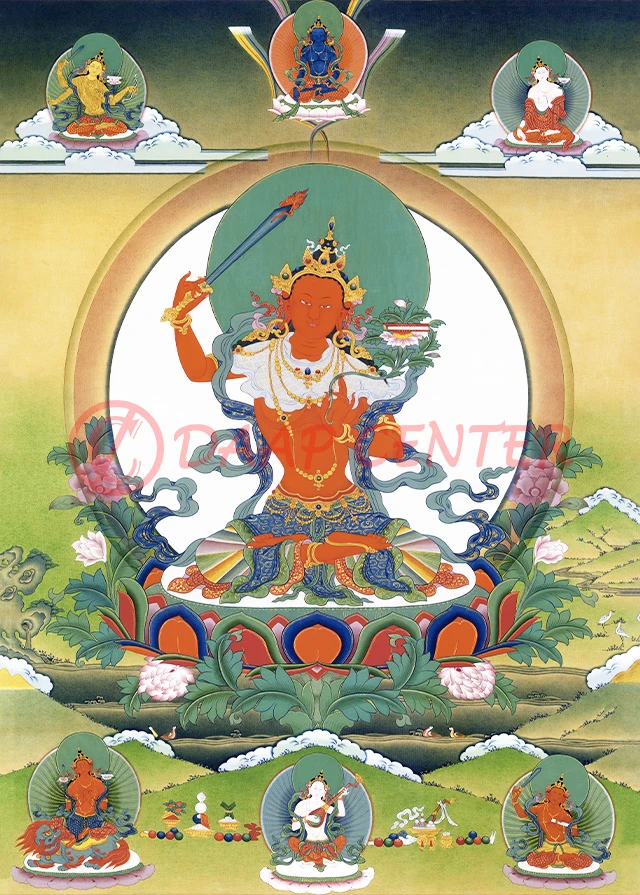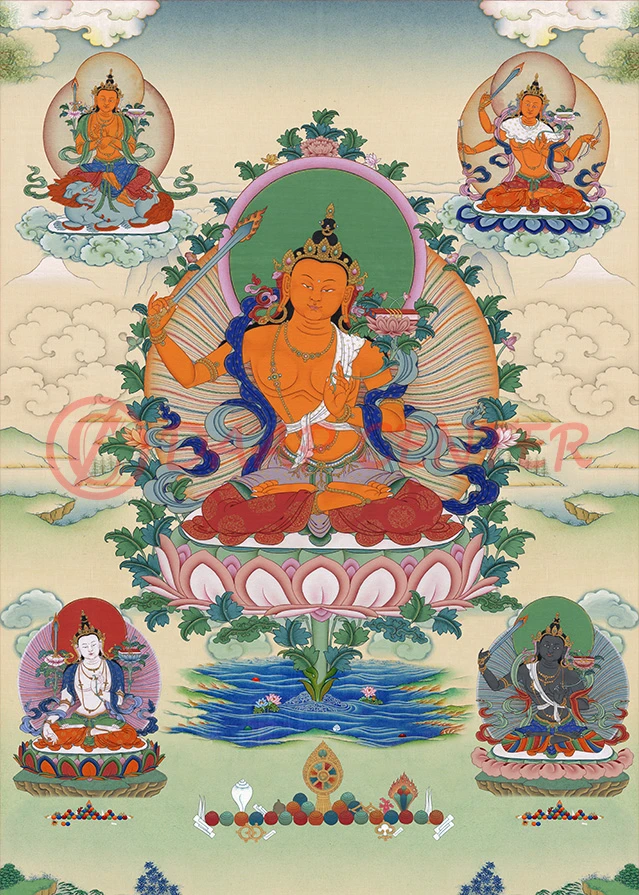
This thangka depicts Five Manjushri (Jampalyang Rigs Nga) in Tibetan, a sacred representation of the Bodhisattva of Wisdom manifesting in five forms. In Mahayana and Vajrayana Buddhism, Manjushri embodies transcendent wisdom (Prajñā), the enlightened insight that cuts through ignorance and reveals the true nature of reality.
At the center, Manjushri appears with a golden-orange complexion, seated in vajra posture on a lotus throne, symbolizing stability, purity, and the awakened state. In his right hand he raises a flaming sword, representing the wisdom that cuts through ignorance and delusion. In his left hand he holds a lotus flower, upon which rests the Prajñāpāramitā scripture, symbolizing the perfection of wisdom and the profound teachings of emptiness. His youthful appearance reflects the ever-fresh and dynamic nature of enlightened wisdom.
Surrounding the central figure are four additional manifestations of Manjushri, each representing different aspects of enlightened wisdom and skillful means. These forms appear seated on lotus thrones and hold symbolic attributes associated with wisdom, knowledge, and the power of enlightened understanding.
Adorned with a five-jeweled crown, silk garments, and precious ornaments, the figures display the traditional bodhisattva appearance, signifying the noble qualities and virtues of enlightenment. Together, the five forms symbolize the complete manifestation of enlightened wisdom, guiding practitioners to overcome ignorance and cultivate clarity, insight, and understanding.
This thangka serves as a powerful support for meditation, study, and the cultivation of wisdom, inspiring practitioners to develop the insight that leads to liberation and awakening.