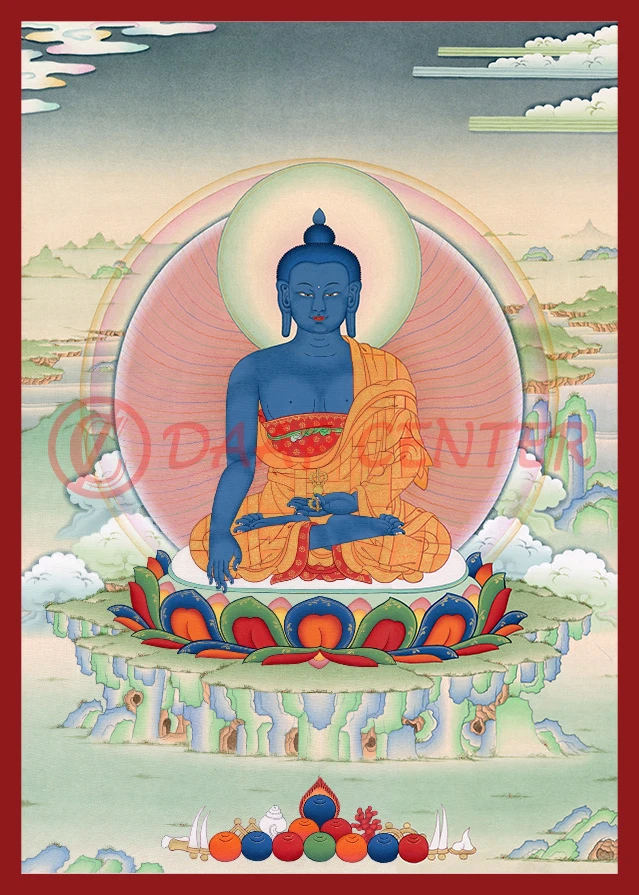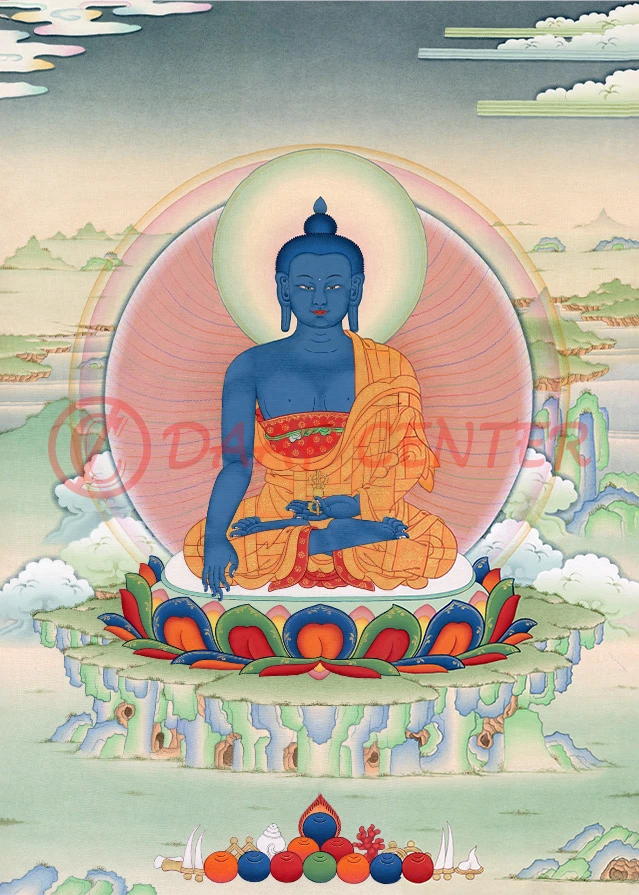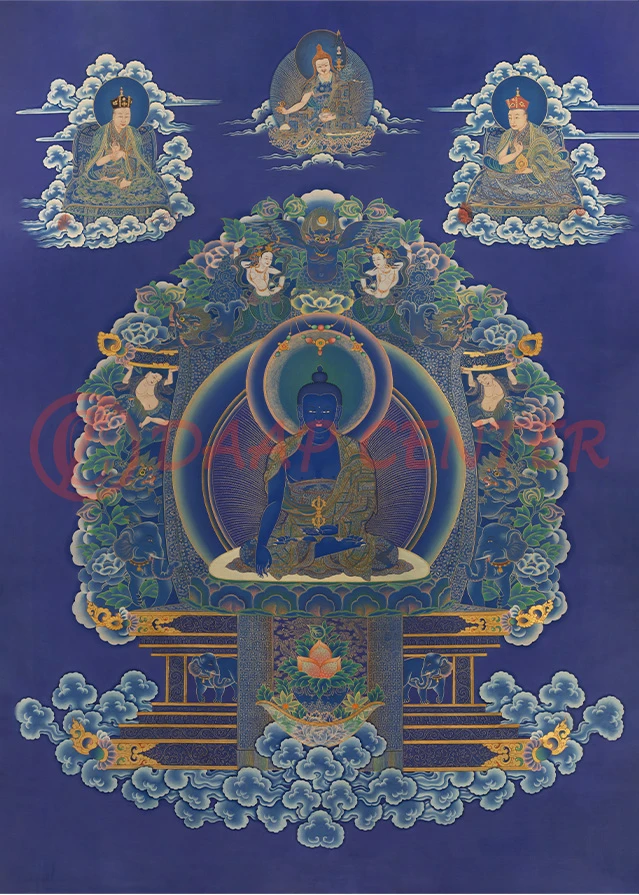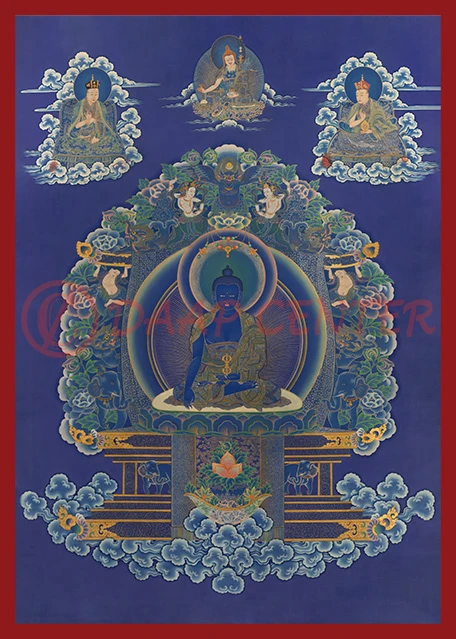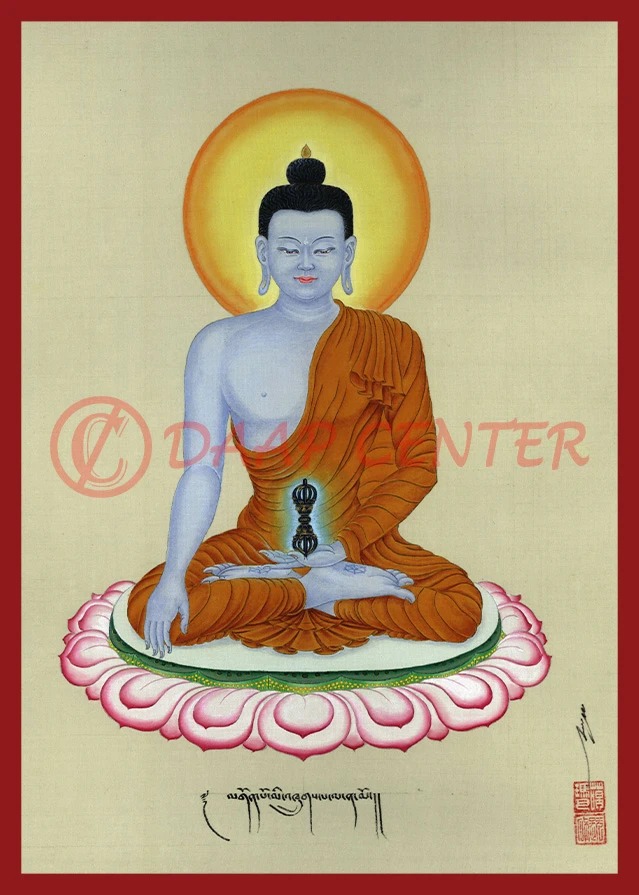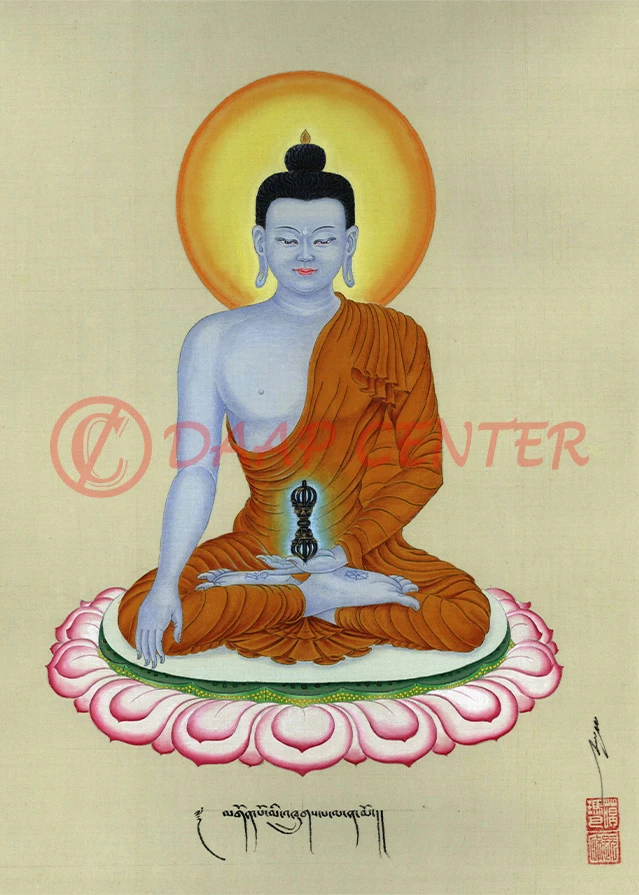
This thangka depicts Akṣobhya Buddha (Sangye Mitrukpa) in a serene and refined form, emphasizing stillness, clarity, and unshakable awareness. His body is rendered in a soft light blue with subtle bluish-violet tones, conveying the calm, mirror-like quality of awakened mind—clear, spacious, and free from agitation.
Seated in vajra posture upon a fully blossoming lotus seat, Akṣobhya embodies perfect stability and inner composure. His right hand extends downward in the bhūmisparśa mudrā, the earth-touching gesture that signifies unwavering truth, grounded realization, and the immovability of awakened awareness. His left hand rests in his lap, gently holding a vajra, symbol of indestructible wisdom and the unchanging nature of reality.
The Buddha’s expression is tranquil and lucid, with softly focused eyes that reflect effortless presence and freedom from emotional disturbance. A warm golden halo surrounds his head, highlighting the radiance of realization while maintaining an atmosphere of quiet restraint rather than dramatic display.
This image of Akṣobhya emphasizes non-reactivity, patience, and the transformation of anger into wisdom, presenting enlightenment as calm strength rather than force. Painted by H.H. the 17th Gyalwang Karmapa, Ogyen Trinley Dorje, the thangka carries a distinctly gentle and contemplative aesthetic, expressing Akṣobhya’s immovability as spacious clarity and unwavering peace.