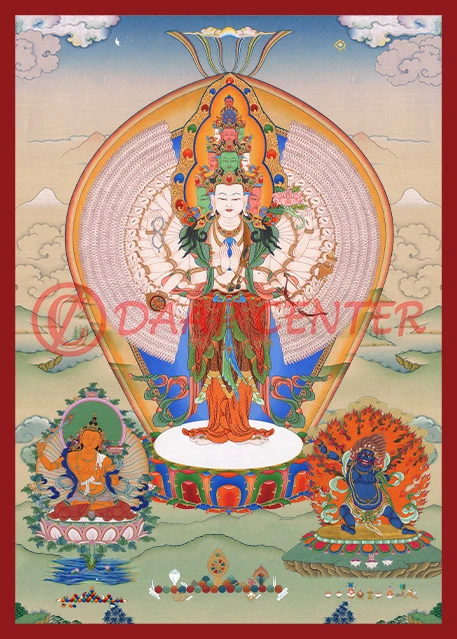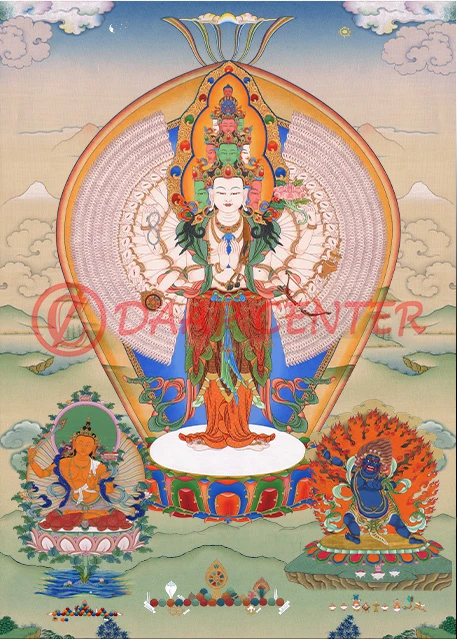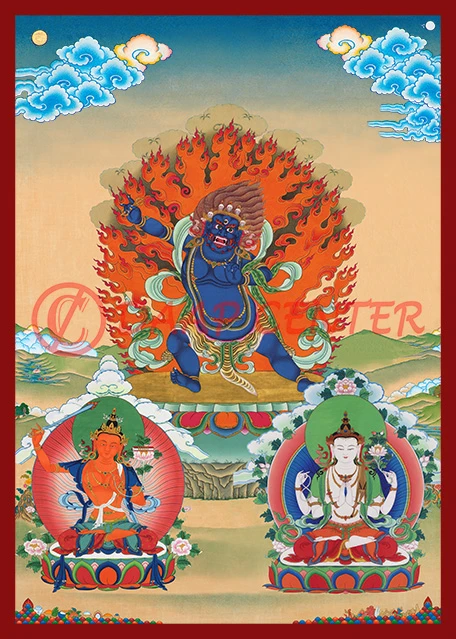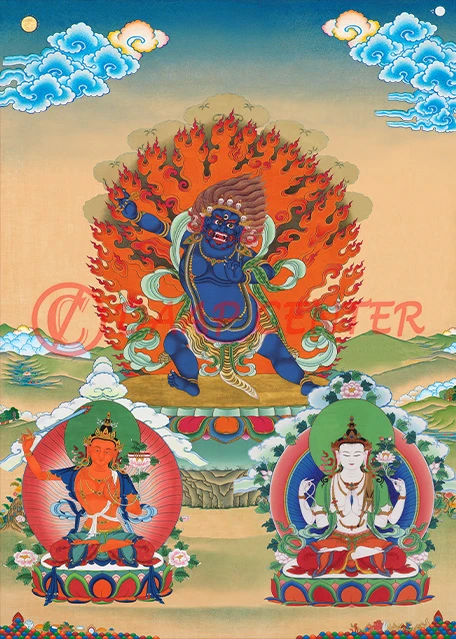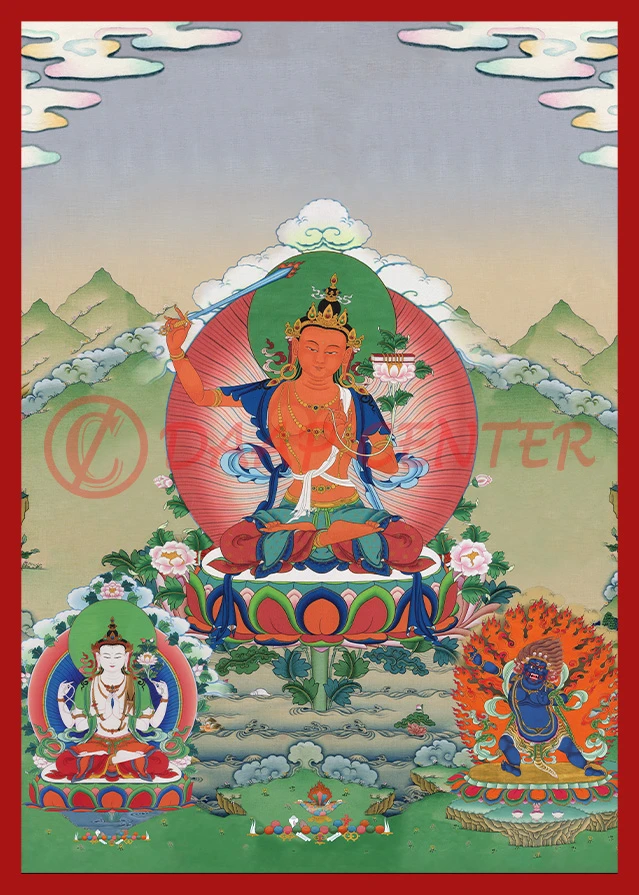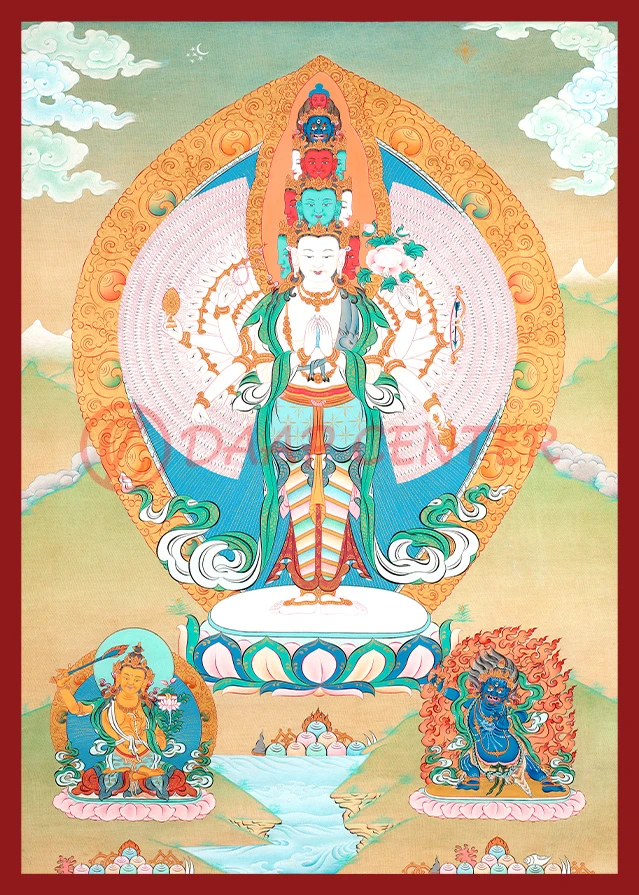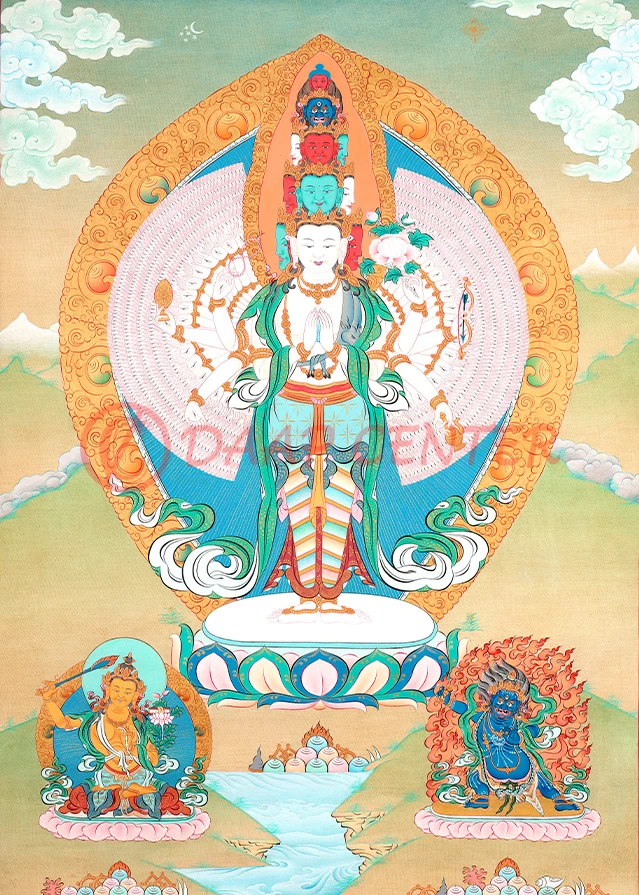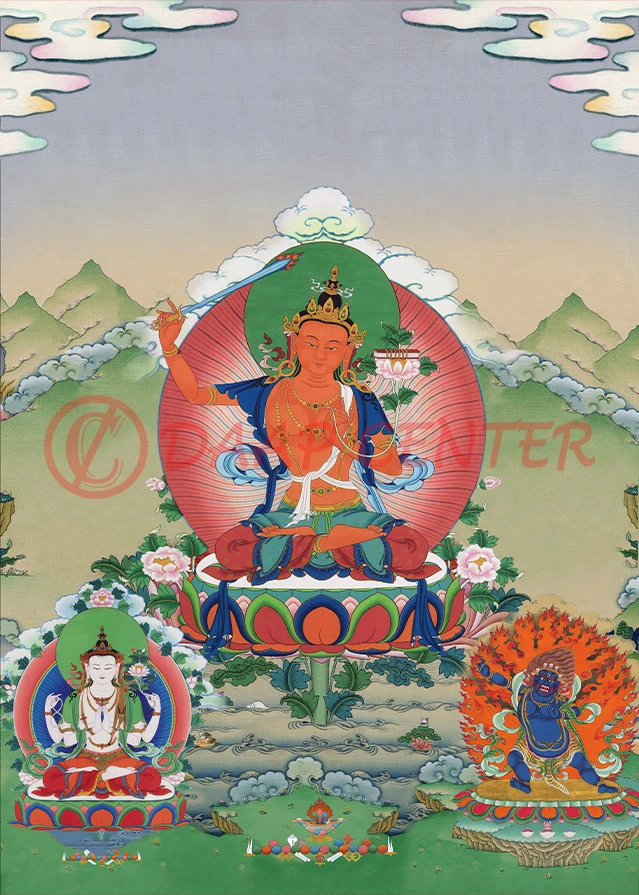
The Lords of the Three Families, known in Tibetan as Rigsum Gonpo, represent the complete expression of enlightenment through wisdom, compassion, and power.
At the center is Manjushri, the embodiment of transcendent wisdom. He is depicted seated in a meditative posture on a lotus throne, symbolizing clarity, stability, and awakened insight. Adorned with silk garments and jeweled ornaments, his central position signifies that wisdom is the foundation of the Buddhist path.
To the left is Avalokiteshvara, the bodhisattva of compassion, shown in a peaceful seated posture. His calm presence and refined ornaments reflect boundless compassion united with meditative stillness, expressing the heartfelt response to the suffering of all beings.
To the right stands Vajrapani, the embodiment of enlightened power. His upright, dynamic posture conveys fearless energy and protective strength. Decorated with ornaments and flowing scarves, he represents the forceful activity that removes obstacles and safeguards the Dharma.
Together, the central wisdom of Manjushri, the compassionate activity of Avalokiteshvara, and the powerful protection of Vajrapani form a complete and balanced path to awakening. A Rigsum Gonpo thangka supports the cultivation of these three essential qualities in harmony.