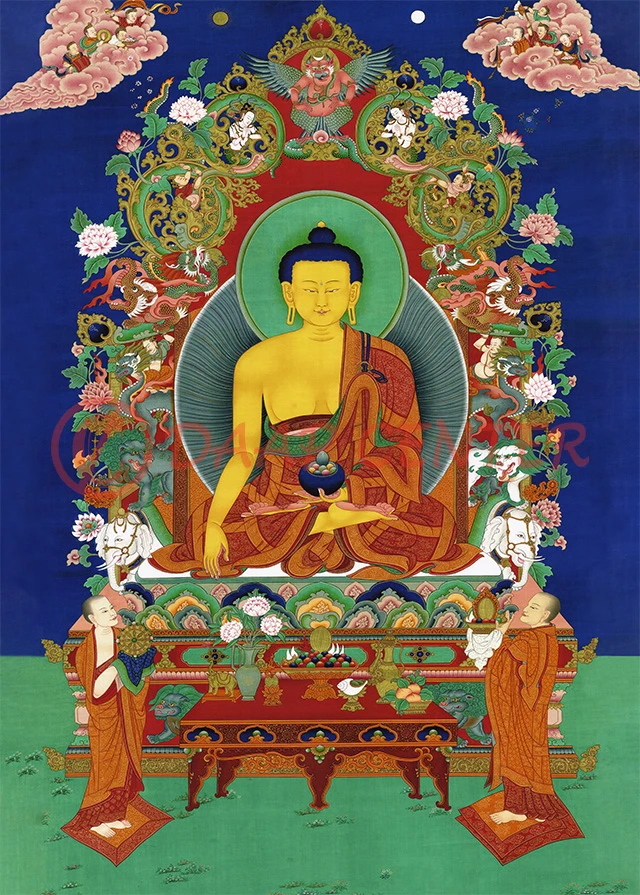
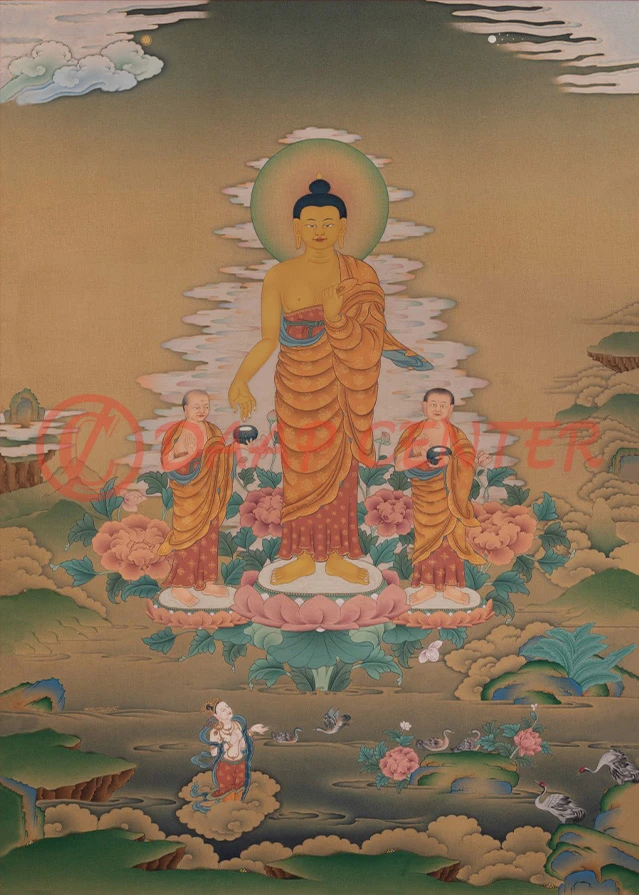
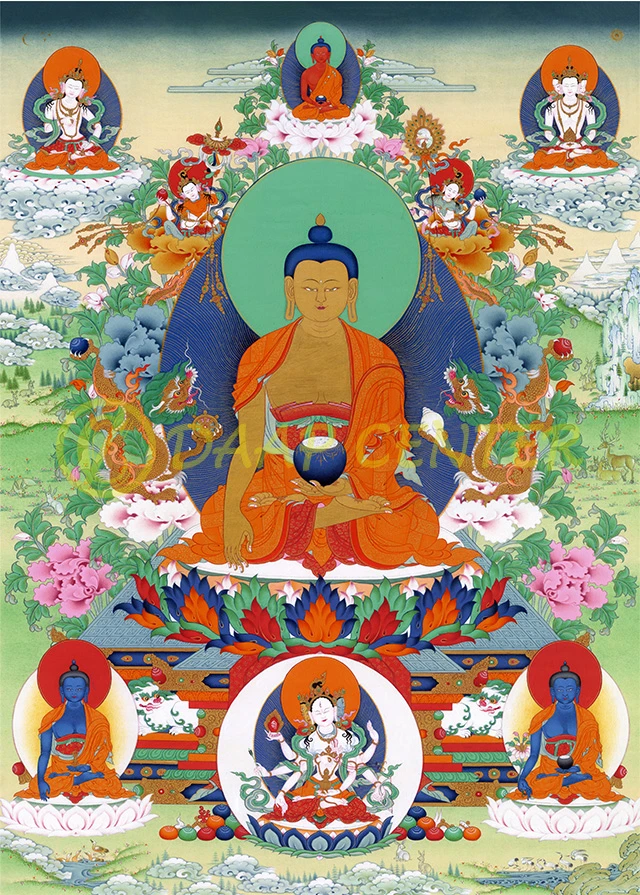
This sacred thangka features Shakyamuni Buddha at the center, surrounded by an assembly of Buddhas and Bodhisattvas, each representing a distinct aspect of wisdom, purification, longevity, and healing. The intricate composition reflects the path to enlightenment, guiding sentient beings toward liberation and spiritual well-being.
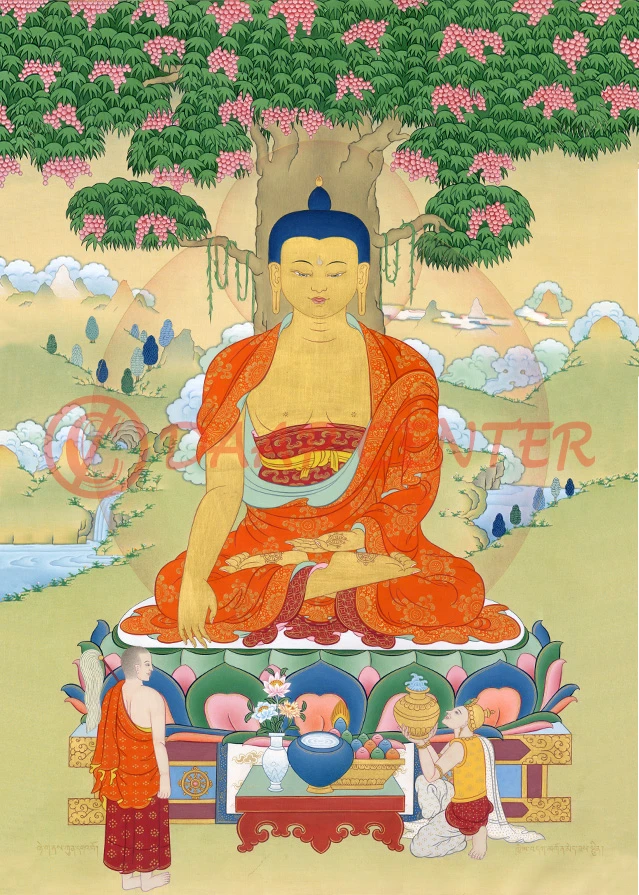
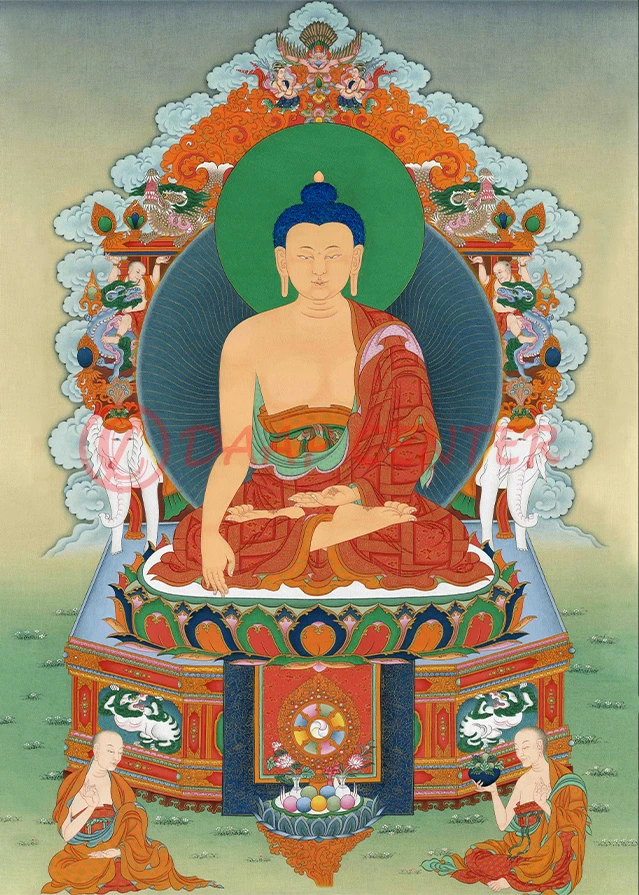
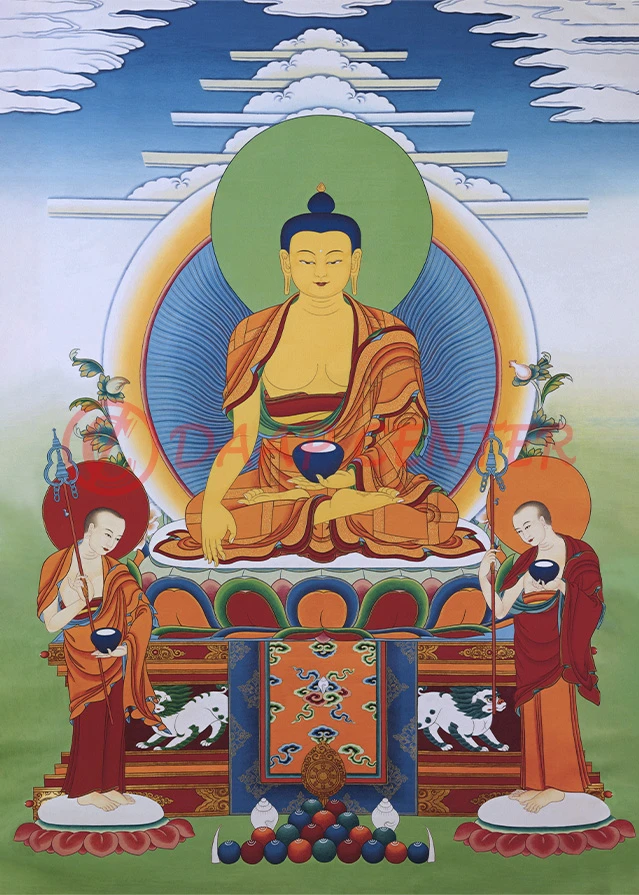
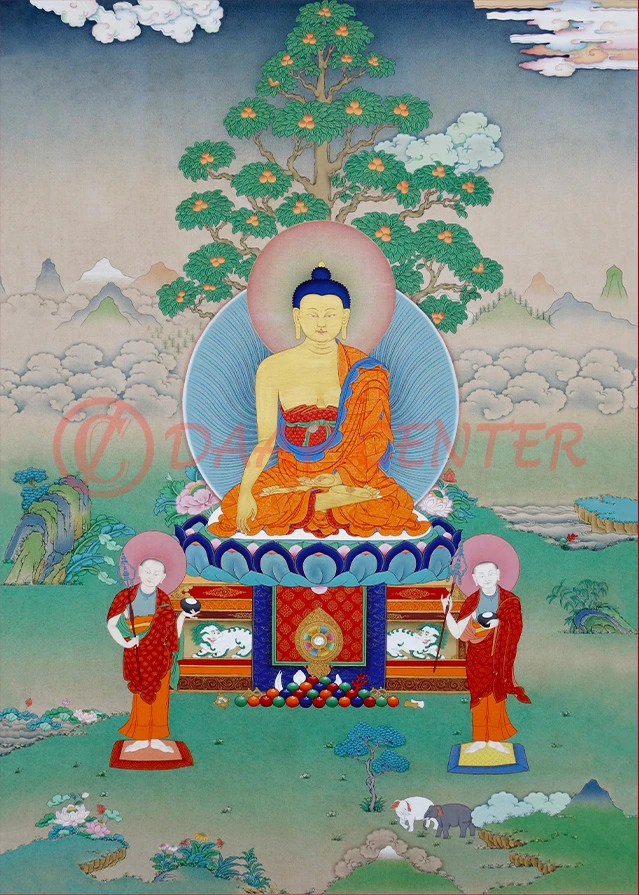
Shakyamuni Buddha at the center, seated in the vajra (lotus) posture on a moon disc atop a lotus throne. Shakyamuni Buddha embodies ultimate wisdom and compassion.
His right hand is in the Bhumisparsha Mudra (earth-touching gesture), symbolizing his enlightenment and victory over Mara, while his left hand holds an alms bowl in Dhyana Mudra. His serene expression reflects boundless compassion and omniscient wisdom.
Shakyamuni Buddha is the teacher of the Dharma (Buddhist teachings) and the founder of Buddhism, guiding beings toward liberation from suffering.
Top Center – Amitabha Buddha (Buddha of Infinite Light)
Amitabha Buddha is the Buddha of boundless light and longevity, presiding over Sukhavati, the Pure Land of Ultimate Bliss. He sits in dhyana mudra, signifying deep meditation, with a serene expression radiating compassion.
Amitabha grants rebirth in the Pure Land to those who call upon him with devotion, ensuring a swift path to enlightenment.
Upper Left – Sarvavid Vairocana Buddha (Kunrig Nampar Nangdze, Buddha of Boundless Radiance)
To the left above Shakyamuni is Sarvavid Vairocana Buddha, the embodiment of omniscience and the wisdom of the Dharmadhatu (ultimate reality). Unlike other depictions of Vairocana, this form, Sarvavid Vairocana, is specifically associated with purification, enlightenment, and the Kunrig Tantra.
His hands rest in Dhyana Mudra, holding a Dharma Wheel (Dharmachakra), signifying the turning of the wheel of Dharma and the universal transmission of wisdom.
He multiple faces representing omniscient awareness in all directions. Depicted in White, radiating pure wisdom and transcendence beyond duality.
Sarvavid Vairocana is a powerful deity in Tantric Buddhism, particularly in practices related to purifying karma and attaining higher wisdom.
Upper Right – Vajrasattva (Bodhisattva of Purification)
Vajrasattva is the embodiment of purification, often depicted as white in color, holding a vajra (thunderbolt) and bell (ghanta). He represents the purification of negative karma and obscurations through his 100-syllable mantra.
Bottom Center – Ushnishavijaya (Namgyalma, Goddess of Longevity)
Ushnishavijaya (Namgyalma) is a powerful goddess of longevity, depicted with three faces and multiple arms, holding various attributes that remove suffering and extend life.
Her blessings ensure long life, protection from untimely death, and purification of negative karma.
She is a key figure in long-life practices in Vajrayana Buddhism.
Bottom Right – Akshobhya Buddha (Buddha of Unshakable Resolve)
To the right, depicted in blue, is Akshobhya Buddha, the Buddha of unshakable resolve, wisdom, and purification of negative karma. He often depicted in the bhumisparsha mudra, also known as the “earth-touching gesture and holds a vajra in his left hand with varada mudra. He is associated with transforming negative emotions, particularly anger, into wisdom. His eastern Pure Land, Abhirati, is a realm of bliss and awakening.
Bottom Left – Medicine Buddha (Bhaisajyaguru, Buddha of Healing) To the left, depicted in deep blue complexion, is Medicine Buddha, the Buddha of healing and longevity, and alleviation of suffering. Holds a myrobalan plant (healing herb) Varada Mudra posture or giving gesture, signifying his ability to cure both physical and mental ailments. Holds a bowl inVarada Mudra filled with medicinal nectar, symbolizing the power to alleviate suffering. Reciting his mantra is believed to bring healing, relief from illness, and spiritual purification.
This thangka serves as a powerful meditative support, helping practitioners connect with the enlightened beings and invoke their blessings for spiritual awakening, healing, and longevity.