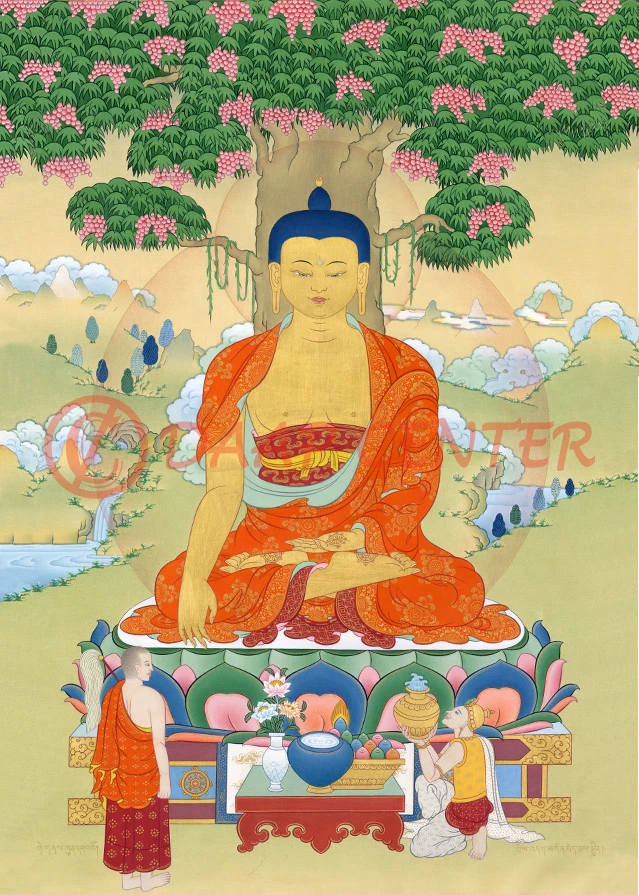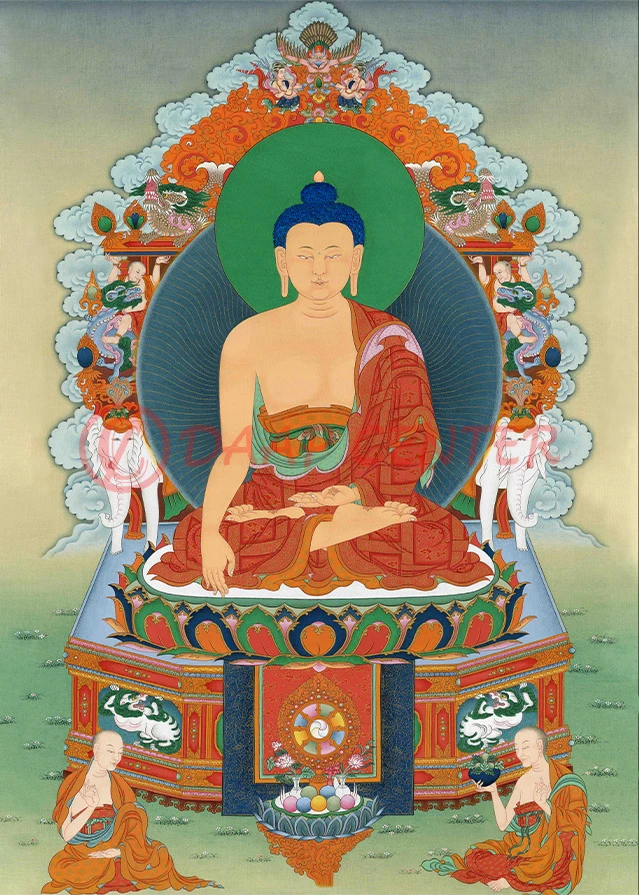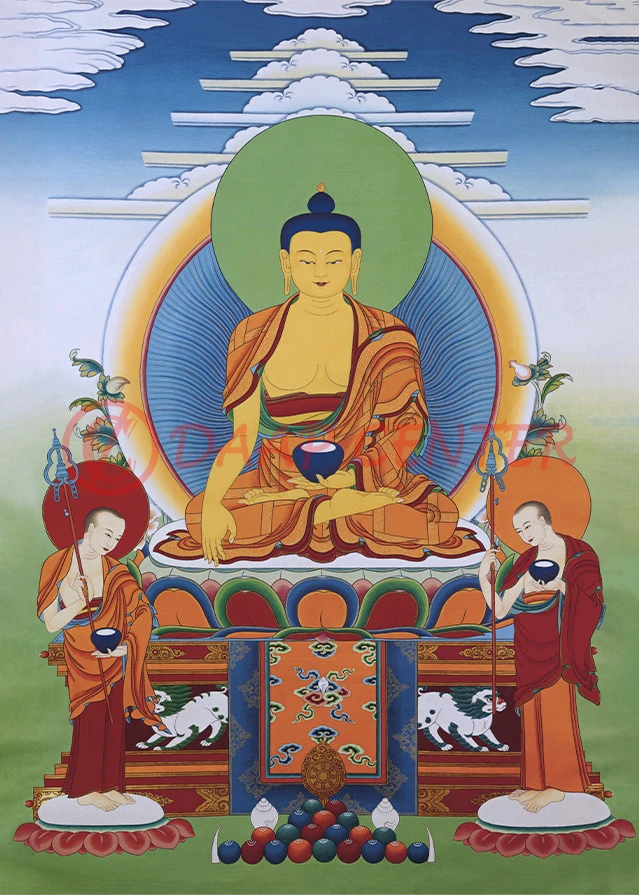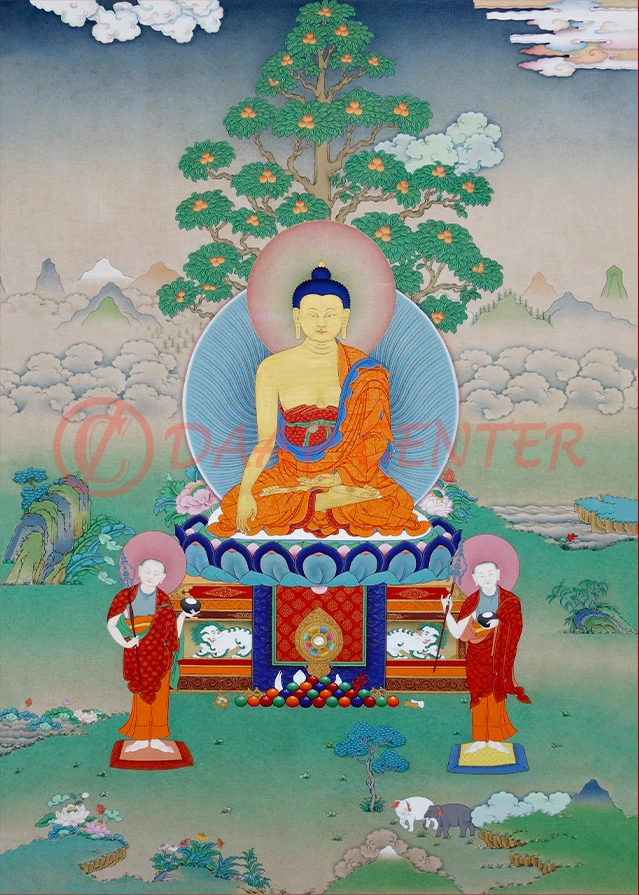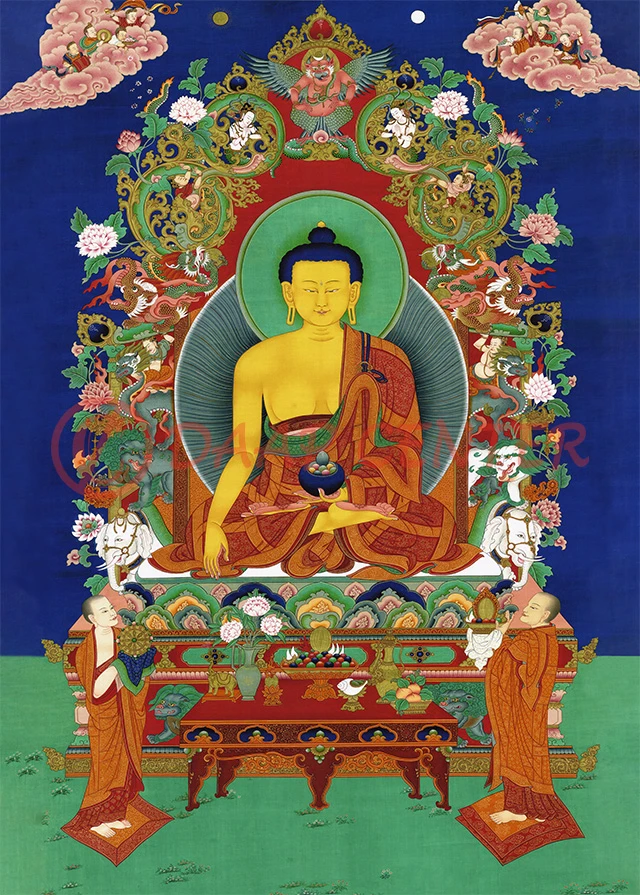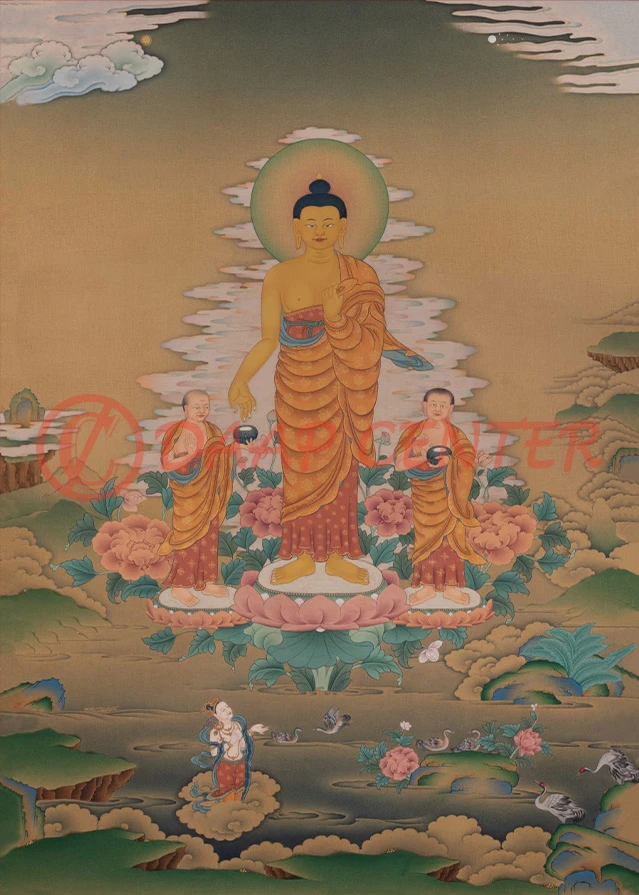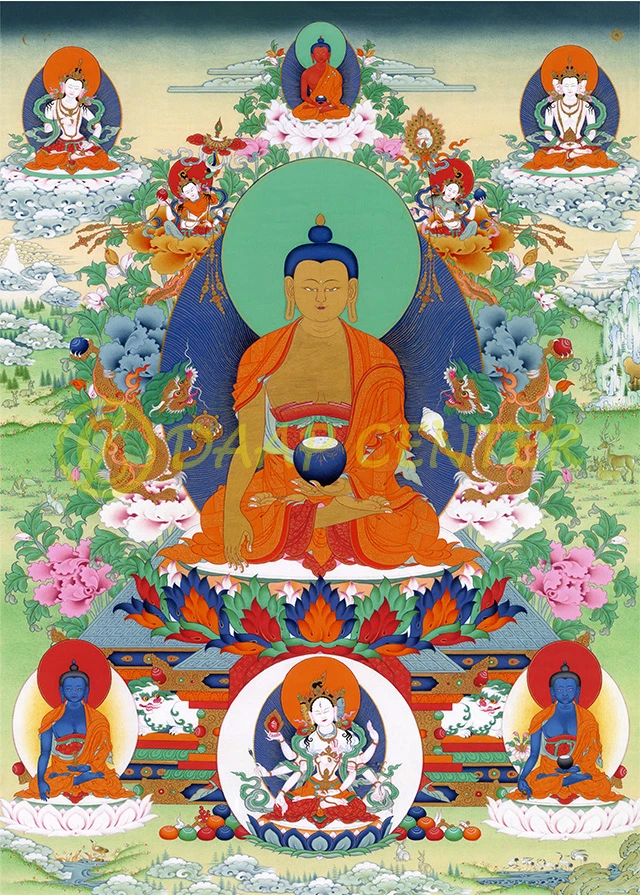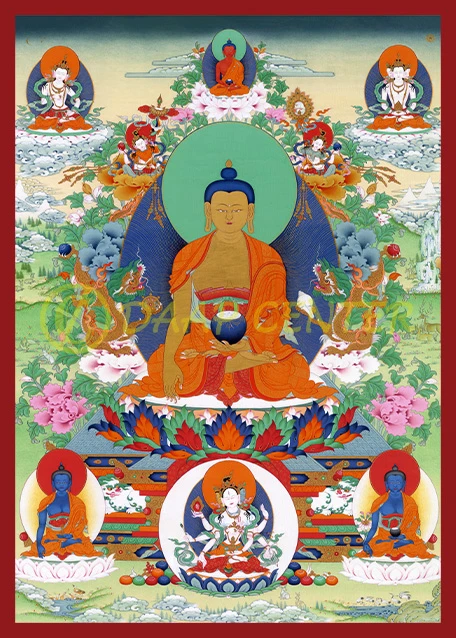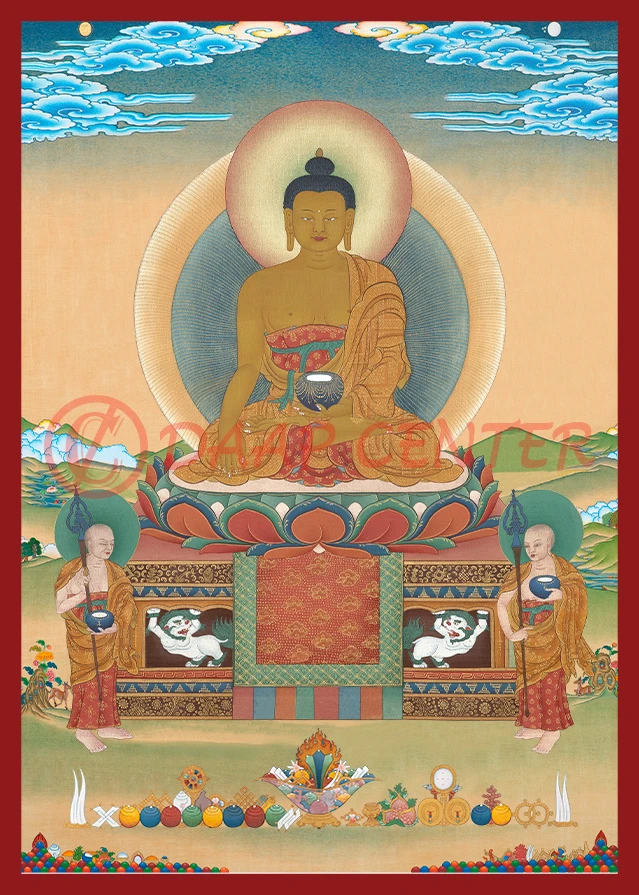
This thangka depicts Shakyamuni Buddha as the embodiment of awakening, wisdom, and liberation from suffering. Seated in vajra (lotus) posture upon a lotus seat and moon disc, he represents perfect stability and enlightened realization. He wears the simple monastic robes (kāṣāya), symbolizing renunciation, humility, and freedom from worldly attachment.
His right hand displays the Bhūmisparśa Mudrā (earth-touching gesture), signifying the triumph of wisdom over delusion and the moment of complete awakening. His left hand rests in dhyāna mudrā, holding an alms bowl that represents meditative absorption and spiritual nourishment.
Flanking the Buddha are his two principal disciples, expressing the full manifestation of the Dharma. Śāriputra, on the left, embodies supreme wisdom and clarity of insight, while Maudgalyāyana, on the right, represents spiritual power and compassionate activity. Both are shown as disciplined monastics, holding alms bowls and staffs, reflecting humility, guidance, and dedication to the path.
Together, this sacred triad symbolizes the harmony of wisdom, meditation, and enlightened activity. A Shakyamuni Buddha thangka serves as a powerful support for contemplation, cultivating mindfulness, inner peace, and confidence in the path to awakening.